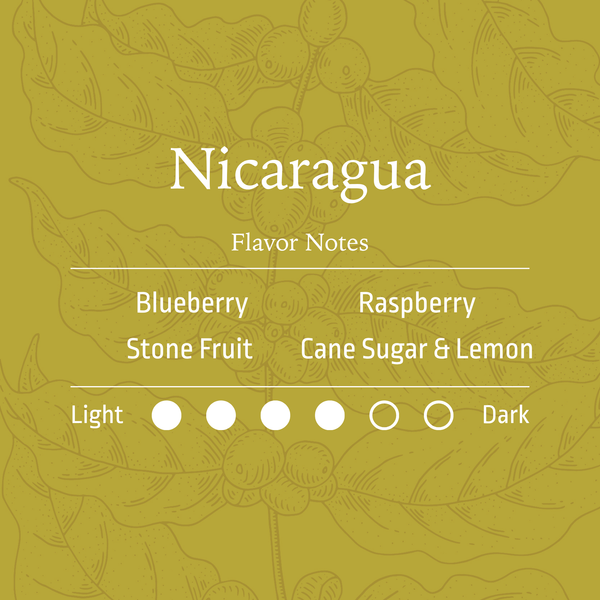
Nicaragua La Bastilla: The Sweetness of Natural-Process Coffee
Oct 19, 2026
Where it comes from
In the highlands of Jinotega, northern Nicaragua, coffee grows among green mountain slopes and cool morning air. This is a region with a long history of coffee cultivation, where altitude and climate create favorable conditions for slow-ripening cherries.
Finca La Bastilla comes from this coffee-growing landscape. At higher elevations, coffee cherries can take longer to mature, allowing their flavors and sweetness to develop. Combined with careful processing and roasting, those qualities help shape the character of the coffee in your cup.
The hands behind it
Great coffee begins long before the first roast. Harvesting at the right moment and handling the cherries carefully are important steps in preserving quality.
With natural-process coffee, that attention matters even more. Because the cherries dry with the fruit still surrounding the beans, the condition of the harvested cherries and the care taken during drying can influence the final flavor.
The goal is to preserve the fruit's character while allowing the coffee's natural sweetness and complexity to shine.
The harvest
Unlike washed coffee, natural-process coffee is dried with the fruit intact. After harvesting, the whole cherries are spread out to dry, allowing the beans to develop alongside the fruit surrounding them.
As the cherries dry, changes in moisture and the interaction between the fruit and the beans influence the coffee's flavor. The process requires careful monitoring: drying too quickly, too slowly, or unevenly can affect the final quality.
When done well, natural processing can produce a cup with pronounced fruit character, rounded sweetness, and a different expression from the cleaner profile often associated with washed coffees.
La Bastilla brings that fruit-forward character into focus.
The varieties
Caturra and Catuai are familiar names in Central American coffee. Both are cultivated across the region and can produce excellent coffees when grown and processed with care.
Variety is only one part of the story, however. Growing conditions, harvest quality, processing, and roasting all contribute to the final cup.
With La Bastilla, the result is a coffee that brings together lively berry notes, ripe fruit, and a sweetness that makes each sip feel complete.
In the cup
Brian Powell described the Nicaragua and Costa Rica coffees as two of his favorites, calling them "really complex, but balanced."
It's a fitting description of La Bastilla.
The first sip brings blueberry and raspberry, followed by ripe stone fruit and the mellow sweetness of cane sugar. A touch of lemon brightens the finish, keeping the fruit character lively without overwhelming the cup.
The sweetness is unmistakable. It's the kind that makes another sip feel almost automatic — juicy, rounded, and full of character.
Our staff summed it up in their own way: stupidly sweet.
But sweetness alone isn't what makes this coffee memorable. It's the balance between ripe fruit, gentle brightness, and a smooth finish that keeps the cup expressive without becoming sharp or overwhelming.
Roasted the day you order
At Sorbo, freshness is part of the process.
La Bastilla is roasted the day you order it — never warehoused, never left sitting on a shelf waiting for its moment. We roast in small batches to bring out the character of each coffee, from its first aromas to its final finish.
Because fruit-forward coffees can be especially expressive, proper rest after roasting and the right brewing method also matter. Freshness isn't simply about the roast date; it's about giving the coffee the care it needs to taste its best.
Brewing it
La Bastilla works beautifully as a pour-over or French press, and it can make a wonderfully sweet espresso, too.
For pour-over, start with a medium grind and water just off the boil. Pour slowly and evenly, allowing the coffee to bloom before continuing with the rest of your water.
For French press, use a coarser grind and give the coffee time to steep before pressing. The result can be a fuller-bodied cup that lets the berry sweetness take center stage.
And don't overlook espresso. The blueberry, raspberry, and cane-sugar notes can translate into a sweet, fruit-forward shot.
However you brew it, try your first cup black. Give the fruit, sweetness, and finish a moment to speak for themselves.
Sometimes, the most memorable coffee doesn't need anything added.